

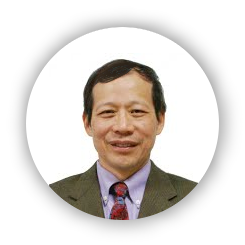
National Yang Ming Chiao Tung University, Hsinchu, Taiwan 300
Tel: +886 3 5731876 Fax: +886 3 5715407
E-mail: ssp@nycu.edu.tw
URL: http://dsns.cs.nycu.edu.tw/ssp
Please feel free to browse my website to get an idea about what we are working on. Some of the webpages may be old, but they can still give an rough idea.
Basically we now work mainly on:
- Future Internet Security: This research work studies the security of Future Internet with cloud and a large-scale of IoT devices. Innovative evasive penetration testing techniques for systems and webpages are investigated.
AI-Driven Behavior Analytics: Learning What Normal Looks Like, and Knowing When It Changes
Whether the entity is a person, an implanted medical device, or a user on an enterprise network, early warning comes from learning its normal behavior and detecting meaningful deviations. Our lab develops AI models for this purpose in three domains, aiming to make patients healthier, medical devices safer, and enterprise networks more secure.
Research Topics:
(1) Behavior Analytics for Early Diagnosis of Parkinson's Disease
(2) Behavior Analytics for Trustworthy Medical Devices
(3) Behavior Analytics for Threat Detection and Hunting
Whether the entity is a person going about daily life, a stimulator implanted in a patient's brain, or a user on an enterprise network, the same core question applies: what is normal behavior, and how quickly can we tell when something has changed? Our lab develops AI models that answer this question in three high-stakes domains.
Recognizing the earliest signs of disease in how people type, move, speak, and sleep
Parkinson's disease is one of the fastest-growing neurological disorders in the world, yet by the time most patients are diagnosed, a large share of their dopamine-producing neurons has already been lost. Research suggests that subtle changes in everyday behavior, such as typing rhythm, walking patterns, voice, handwriting, and sleep, may appear years before a clinical diagnosis.
This research applies the principles of behavior analytics to human health: learning each person's normal behavioral baseline from everyday digital interactions, and detecting the gradual deviations that may signal the onset or progression of disease. Research topics include, but are not limited to:
Students will work with public datasets such as mPower, the keystroke and gait datasets on PhysioNet, and Parkinson's speech corpora.
Detecting when life-critical devices stop behaving normally, whether the cause is failure, depletion, or attack
Implantable and connected medical devices, such as deep brain stimulators for Parkinson's disease, pacemakers, and insulin pumps, now communicate wirelessly with clinician programmers, cloud platforms, and smartphones. A failing battery, a degrading lead, a firmware bug, or a malicious wireless command can all put a patient at risk, and many such problems are discovered only after symptoms appear.
Instead of building separate defenses for each threat, this research learns the normal behavioral profile of each device and patient, and raises an alert the moment behavior deviates. Research topics include, but are not limited to:
Students will work with device simulators, wireless testbeds, and public Internet of Medical Things datasets such as CICIoMT2024.
Finding attackers who look like legitimate users
Modern attackers rarely trip signature-based defenses. They steal valid credentials, move laterally with built-in administrative tools, and blend into routine activity. The traces they leave are behavioral: a service account logging in at an unusual hour, a workstation suddenly querying the domain controller, a user accessing systems far outside their normal role.
This research builds behavioral baselines for users, hosts, and service accounts, and detects the deviations that signal compromise. Research topics include, but are not limited to:
Students will work with public datasets such as the LANL cybersecurity datasets, the CERT Insider Threat dataset, and DARPA OpTC, as well as realistic enterprise testbeds.
We welcome students from computer science, electrical engineering, cybersecurity, and related fields, as well as students with medical backgrounds, including medical school students. Students with clinical training bring essential insight to Topics 1 and 2: recognizing which behavioral changes are clinically meaningful, understanding how devices are programmed and adjusted in practice, and shaping how findings and alerts should reach clinicians and patients.
No prior medical knowledge is required for engineering students, and no prior programming expertise is required for medical students; we pair students across disciplines so each learns from the other. Every student will gain hands-on expertise in behavioral AI, anomaly detection, and security, skills in high demand in industry, academia, and healthcare.
Contact: ssp@nycu.edu.tw
↓